Detecting Eye Diseases Early
Many eye diseases develop quietly, without noticeable symptoms in their early stages. That’s why early detection plays such an important role in protecting long‑term vision.
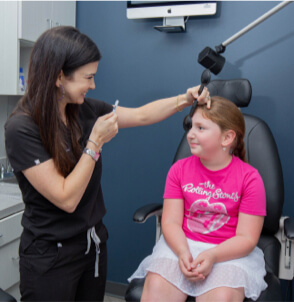
During a comprehensive eye exam, your doctor carefully evaluates both your vision and your eye health, looking for early changes and patterns that may need monitoring over time. When appropriate, advanced diagnostic tools allow us to look deeper — often before vision is affected.
Regular exams give us the opportunity to identify concerns early, establish healthy baselines, and guide care with confidence and clarity.
Book Online
Our Diagnostic Eye Care Technology
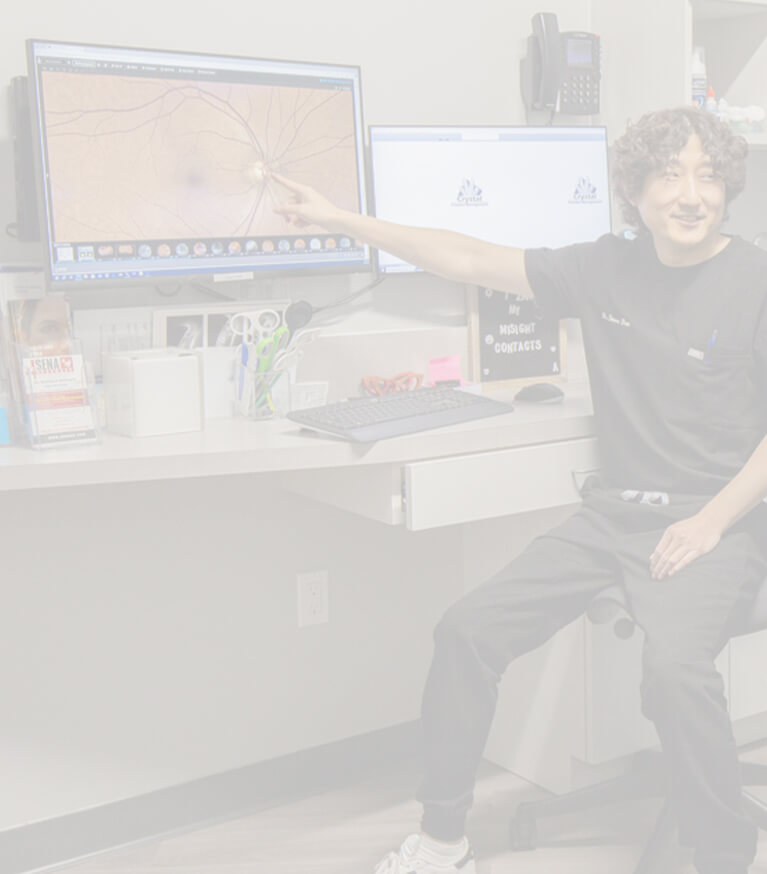
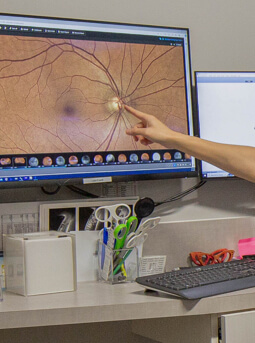
We use innovative diagnostic technology to monitor your eye health. We use high-resolution digital retinal photography to capture detailed images of your retina, which is the light-sensitive tissue that lines the inside of your eye.
We also use optical coherence tomography (OCT) to map and measure the layers of your retina and optic nerve. This technology helps us detect and monitor conditions such as glaucoma and macular degeneration with precision.
When necessary, your eye doctor may recommend additional functional testing, including:
- Visual field testing, sometimes performed using a virtual‑reality headset designed to be comfortable and intuitive
- Visual Evoked Potential (VEP) testing to evaluate how information travels from the eyes to the brain
- Electroretinography (ERG) to assess how the retina responds to light
- Dynamic vision and eye‑movement recordings to better understand how the eyes track, focus, and work together during real‑world tasks
- Intraocular pressure measurements as part of a comprehensive eye health evaluation
Each test is selected with purpose, based on your exam findings, symptoms, and care needs, allowing your doctor to look deeper when it matters most.
Eye Diseases We Manage
We monitor and manage a variety of eye conditions that affect the health of your eyes and your vision. Among these conditions are glaucoma, macular degeneration, cataracts, keratoconus, and conjunctivitis. We also screen for systemic diseases, such as diabetes, high blood pressure, and heart disease, which can cause ocular symptoms that appear during an eye exam.
We assess the health of your eye, measure your visual field, and check your eye pressure during each exam, not only to screen for eye disease, but also to develop a healthy baseline to measure against in the future.
Learn more about some of the eye diseases we manage below.
Glaucoma is a group of eye conditions that affect the optic nerve, which plays a vital role in vision. The most common form develops slowly and painlessly, often without noticeable symptoms in its early stages. Because of this, many people can have glaucoma for years without realizing it.
Over time, glaucoma may cause subtle changes such as increased eye pressure, gradual loss of peripheral (side) vision, or damage to the optic nerve. If left untreated, these changes can lead to permanent vision loss.
Regular eye exams are the best way to screen for glaucoma early, before vision is affected. With careful monitoring and personalized care, we work to detect changes early, manage the condition thoughtfully, and protect your vision over the long term.
Macular degeneration affects the macula, the central part of the retina responsible for sharp, detailed vision and color perception. As changes occur in this area, people may notice symptoms such as blurred or distorted central vision, which can make activities like reading or recognizing faces more challenging over time.
While there is currently no cure for macular degeneration, early detection, prevention‑focused care, and ongoing monitoring can make a meaningful difference. We work closely with our patients to identify risk factors, monitor changes carefully, and support eye health through personalized recommendations aimed at slowing progression and protecting vision.
Our goal is to help you preserve visual function and maintain confidence in your day‑to‑day life.
Cataracts develop when the normally clear lens inside the eye becomes cloudy. This most often happens gradually as part of the natural aging process, but cataracts can also be influenced by factors such as UV exposure, eye injury, or family history. Cataracts don’t grow like a mass — rather, they result from subtle changes in the lens over time.
As the lens becomes cloudier, vision may appear blurred or dim, and glare from lights — especially at night — can become more noticeable. In the early stages, changes in vision can often be managed with updated glasses or lenses.
When cataracts begin to interfere with daily activities, comfort, or independence, we’ll take the time to discuss whether cataract surgery may be appropriate and help guide you through next steps with clarity and confidence.
Protecting your eyes from UV exposure by wearing sunglasses outdoors may help reduce the risk of certain types of cataracts and support long‑term eye health.
Keratoconus is a condition in which the normally round cornea — the clear, front surface of the eye — gradually thins and changes shape, forming a more cone‑like curve. As this happens, people may notice symptoms such as blurred or distorted vision, increased light sensitivity, and difficulty seeing clearly at night.
Keratoconus often begins in the late teens or early twenties, though it can develop at other times as well. In many cases, the condition stabilizes over time. With careful monitoring and the use of specialty contact lenses, such as scleral lenses, we’re often able to restore clear, comfortable vision and support visual function for daily life.
Commonly known as pink eye, conjunctivitis is a general term for irritation and redness of the eye. Some forms can be contagious, while others are not. Conjunctivitis may be caused by a bacterial or viral infection, or by allergies, which are not contagious.
Because treatment depends on the cause, an accurate diagnosis is important. Bacterial conjunctivitis is typically treated with prescription antibiotic eye drops or ointment. If you’re experiencing symptoms of pink eye, we encourage you to contact our office so we can determine the cause and recommend the most appropriate care.
Flashes of light or floaters in your vision can indicate changes to the vitreous gel inside your eye. While often harmless, they can also signal serious conditions, which can potentially cause vision loss, such as retinal detachment.
If you notice an increase in floaters or other changes to your vision, please contact us immediately to help identify the cause and prevent potential damage to your eyes and vision.
Dry Eye Diagnosis
Dry eye is a group of eye conditions caused by a disruption to your tear film. It occurs when the eyes cannot produce enough tears or produce poor-quality tears that evaporate too quickly. Symptoms of dry eye include redness, excessive tearing, mucous discharge, irritation, or the persistent feeling of something in your eye.
Dry eye can sometimes be confused with other conditions, such as allergies and infections. Wearing contact lenses, taking certain medications, hormones, systemic health conditions, and environmental causes can lead to dry eye or exacerbate an existing condition.
Dry eye has a variety of causes, so diagnosis is the first step to provide relief. Depending on the cause of your symptoms, we can recommend a number of specialty dry eye treatments that get to the root cause of your symptoms for long-term results.
Early Detection Prevents Vision Loss
We monitor your eyes carefully during each comprehensive eye exam. Even if you do not have visual symptoms, we’ll help you keep a close watch on your eye health to prevent future concerns from developing unnoticed.
Whether you are looking for help monitoring an existing eye condition or just want to take a proactive approach to your eye health, we’re here to guide you every step of the way. Book your eye exam with Bellaire Family Eye Care today.
Book Online

Visit Our Location
Where to Park
We’re located at 5001 Bissonnet Street, between South Rice and North 3rd Avenues.
Free parking is available in the lot below the building.
Our Address
- 5001 Bissonnet St #107
- Bellaire, TX 77401
Contact Information
- Phone: 713-664-8087
- Email: appointments@bfeye.com
Hours of Operation


What Our Patients Are Saying
Lorem ipsum Lorem ipsum Lorem ipsum Lorem ipsum Lorem ipsum Lorem ipsum Lorem ipsum Lorem ipsum Lorem ipsum Lorem ipsum Lorem ipsum Lorem ipsum Lorem ipsum Lorem ipsum Lorem ipsum Lorem ipsum

John Doe
Lorem ipsum Lorem ipsum Lorem ipsum Lorem ipsum Lorem ipsum Lorem ipsum Lorem ipsum Lorem ipsum Lorem ipsum Lorem ipsum Lorem ipsum Lorem ipsum Lorem ipsum Lorem ipsum Lorem ipsum Lorem ipsum
John Doe